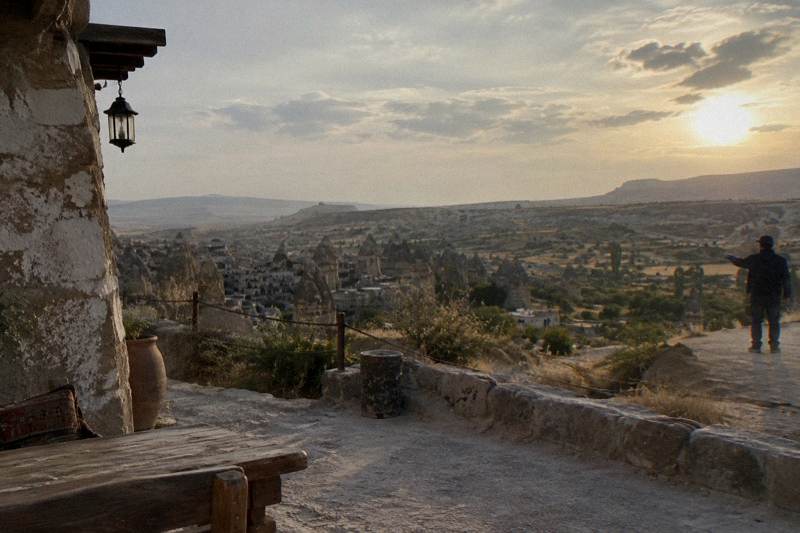
What Should You Wear For The Underground City Stop On A Cappadocia Green Tour?
Plain packing logic for the underground city stop on a Cappadocia green tour: layers for the season, sturdy closed shoes, and what the Ministry says about conditions below ground.
Part of the green-tour coverage at Derinkuyu Underground City Tour, where the underground city stop is compared across shared, small-group and private days.
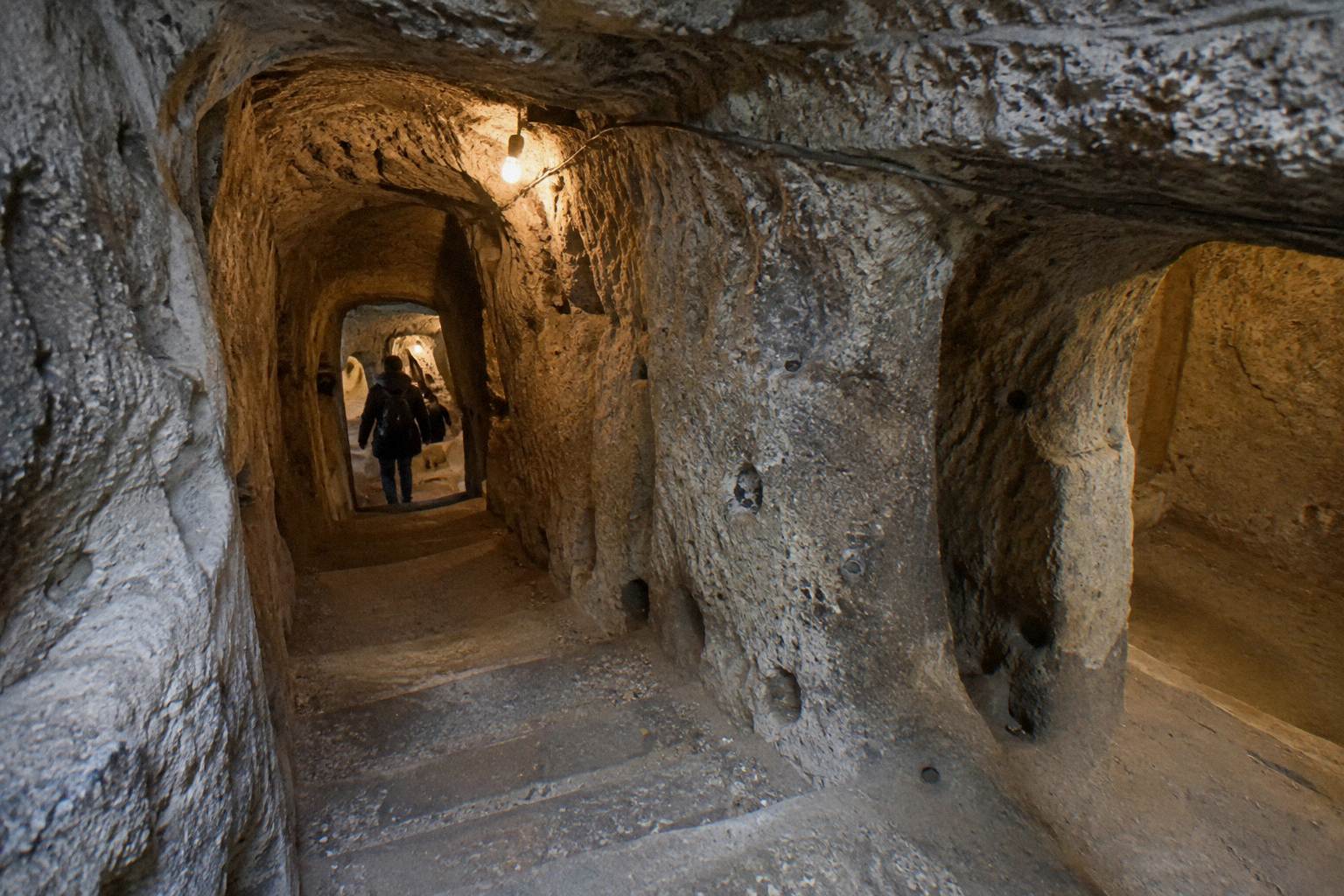
Wear closed shoes with grip and two or three layers. The Ministry describes the underground settlements as cool in summer and warm in winter, with passages called low, narrow and sloping, so the constants are steady footing and flexible clothing, not special gear. Your outer layer follows the season above ground, where Nevşehir averages range widely.
That is the whole answer in one paragraph, but the reasoning behind it is worth spelling out, because the question hides a common mistake: dressing for the city instead of dressing for the day. A green tour is a long outing, typically eight to nine hours, and the underground stop is one part of it. You will spend most of the day above ground, in open valleys, at viewpoints and on a lunch stop, so the clothing that matters most is clothing for the season in Cappadocia, with one adjustment for the hour or so spent below.
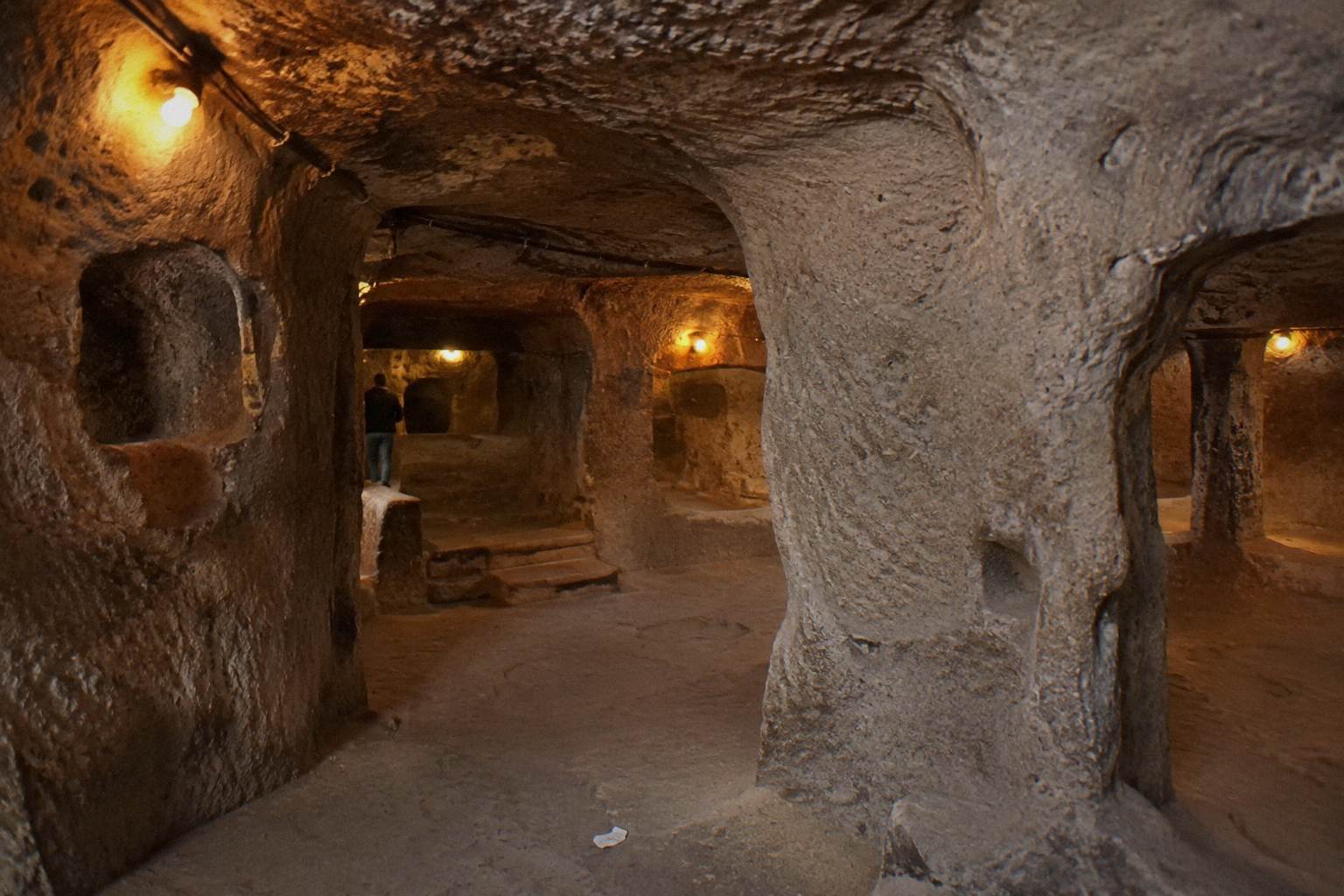
The Ministry's wording is the only sourced description of conditions below ground, and it is deliberately general. The settlements carved into soft tuff are, per the culture portal, cool in summer and warm in winter, and the Ministry museum page for Kaymaklı is where the layout of four open levels is described. Nowhere does an official source give a temperature in degrees for the galleries, and no tour line describes wet floors, lighting or step counts, so none of that appears here. What the Ministry does say is enough: the passages at Kaymaklı are "low, narrow and sloping", a phrase that tells your knees and your shoes more than any packing list.
Start from the shape of the day. MyTrip Travel Day runs 8 to 9 hours from €33 per person, rated 4.8 across 332 reviews, with lunch and entrance fees tied to the option you choose. A day of that length spans morning cool and afternoon heat in summer, or a short cold window of daylight in winter, and the underground stop sits somewhere in the middle. Dress for the whole arc, not the single stop.
The same logic holds on every green line. Cappaventures, Optional Lunch runs 7 hours 30 minutes from €15 per person, rated 4.9 across 250 reviews, and Tatildokya Small Group Day runs 7 to 8 hours from €55 per person, rated 4.9 across 92 reviews. Whatever line you book, the wardrobe answer barely changes: the tour length shifts the outer layer, and the Ministry's description of the galleries fixes the shoes.
Two timing details shape the packing. Both Derinkuyu and Kaymaklı open 08:00 and close 17:00, with the box office shutting at 16:15, so the underground hour almost always lands inside the middle of the day rather than at a cold edge. And since the ticket is listed at €13 per city for foreign visitors, some travelers skip the stop entirely on lines where entrance fees are not included, which means a lighter load for the rest of the day above ground.
Rain changes the answer more than the caves do. Nevşehir's wettest month is May, at 57.4 mm, while July and August sit near 10 mm, so a May booking earns a packable shell while a midsummer day mostly asks for sun cover and water alongside the same grippy shoes.
How Cold Is It Underground, And Does It Change What You Pack?
The Ministry says the underground settlements are cool in summer and warm in winter, and stops there. That sentence, plus its description of Kaymaklı's passages as low, narrow and sloping, is the full sourced picture, and it points to one removable warm layer in every season rather than a heavy coat worn throughout.
Read the Ministry wording carefully and it becomes practical. Cool in summer means that when you descend from a 29.3 °C July afternoon, you will notice the difference within minutes. A light long-sleeve top or a thin fleece in your day bag covers that, and you will be glad of the same layer back above ground if the day turns breezy. Warm in winter cuts the other way: the Ministry culture portal for Derinkuyu describes a city that holds warmth, so the heavy jacket you need for a January mean minimum of -3.5 °C will come off while you are below ground. Zips and buttons beat pullovers for exactly this reason.
The climate numbers come from the Turkish State Meteorological Service's long-term averages for Nevşehir province, and they are the reason your outer layer is a seasonal decision. April and October sit between the extremes, with mean maximums of 16.3 °C and 19.1 °C, which makes a single removable mid layer the workhorse of a shoulder-season day. The table below lays out the four markers a packing decision actually uses.
| Month | Mean daily max (C) | Mean daily min (C) | Outer layer for the day |
|---|---|---|---|
| January | 4.1 | -3.5 | Insulated coat, hat, gloves for above ground |
| April | 16.3 | 5.2 | Mid layer plus a windproof shell |
| July | 29.3 | 14.6 | Sun cover and one thin layer for the galleries |
| October | 19.1 | 7.4 | Fleece or light jacket, removable by midday |
The Meteorological Service page for Nevşehir also shows the rain pattern: May is the wettest month at 57.4 mm, while July and August drop to about 10 mm each. A packable rain shell earns its space from April to May; in high summer it is optional weight.
The stop itself is where the Ministry's second phrase matters. Kaymaklı's galleries are low, narrow and sloping, a design the Ministry says restricted the mobility of an enemy, and the practical clothing consequence is freedom of movement: nothing long and loose that drags, no bulky scarf ends, no restrictive tailoring. Clothing that lets you bend and take short steps comfortably is the whole requirement, and ordinary travel clothes already meet it.
Which Shoes Work Best For The Passages?
Closed shoes with a rubber sole and real tread are the right choice for Kaymaklı. The Ministry describes the passages as low, narrow and sloping, so you want grip on sloping floors, toe protection in narrow galleries, and comfort for a long day. Trainers or light hiking shoes cover all three.
The case against sandals and smooth soles is structural, not speculative. The passages at Kaymaklı are described by the Ministry as sloping, and a sloping stone floor asks a shoe for traction, the same as any historic site. The city is carved into tuff, a soft volcanic rock, and carved floors are uneven by nature. None of this demands boots; it rules out flip-flops, high heels and slick-soled dress shoes, all of which trade grip or toe protection for looks.
Think about the rest of the day too. Green tours pair the underground stop with valley walks and open-air sites, and lines like Phoenix, Kaymakli And Lunch run 7 hours from €28 per person, rated 4.9 across 562 reviews, with hotel pickup included. Seven hours on your feet across mixed surfaces is a walking-shoe day, and the underground galleries are simply the part of it where grip matters most.
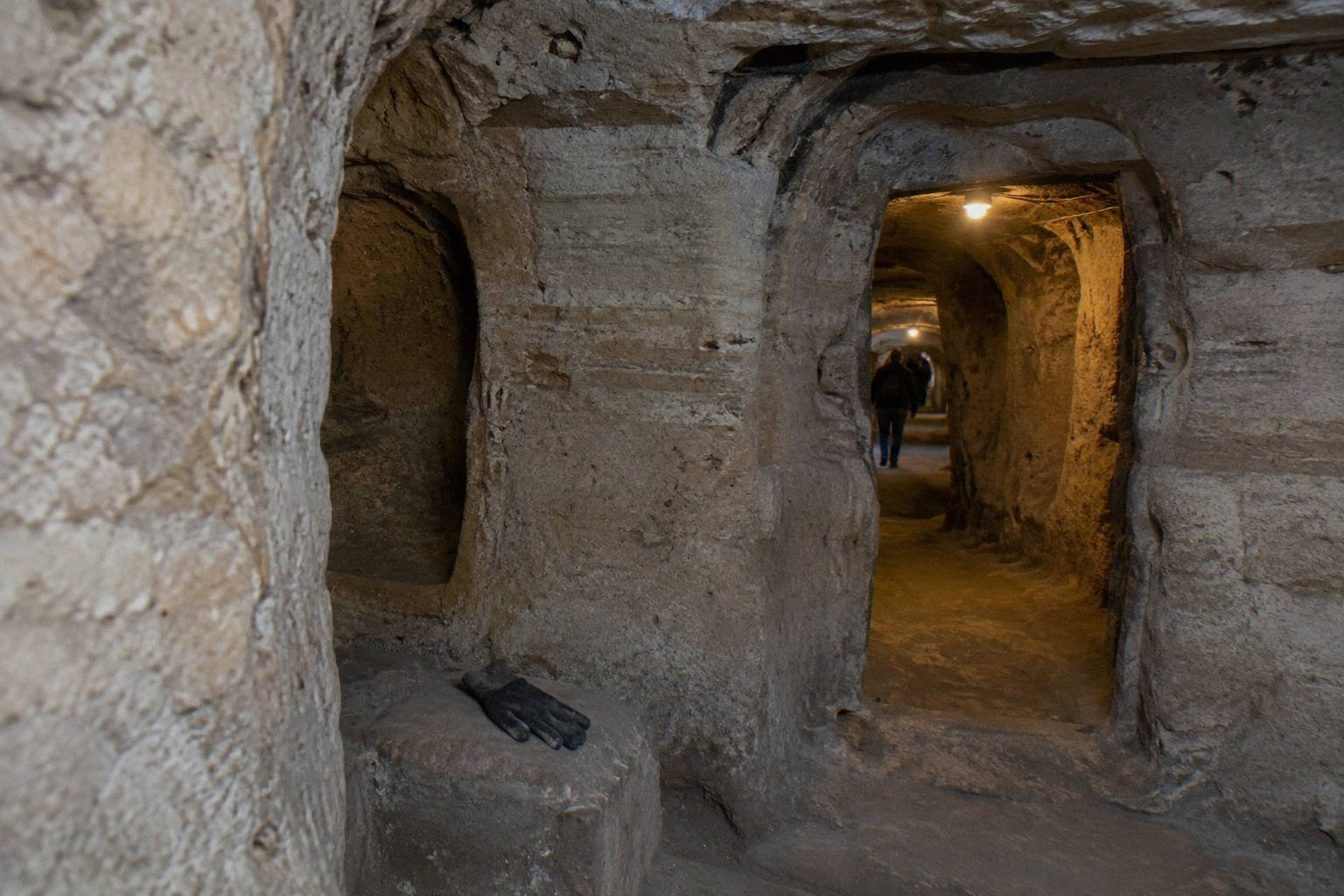
Break shoes in before the trip rather than buying new ones for the day. The Ministry's phrase about restricted enemy mobility is a reminder that these galleries were not built for comfortable walking; they were built to slow people down. Old, comfortable, grippy shoes beat new ones every time, and a pair already shaped to your feet will carry you through both the galleries and the long valley stretches either side of them.
What Layers Make Sense Across A Full Green Tour Day?
Three layers cover every season: a base top, a mid layer like a fleece, and an outer shell. Summer thins that to base plus one warm layer in the bag; winter thickens the shell into an insulated coat for the above-ground hours. The Ministry's cool and warm wording is why the mid layer travels in the bag.
Layering beats a single heavy garment because a green tour moves through contrasts. Morning pickup happens at the coldest part of the day, valleys are exposed, lunch is indoors at a local restaurant on most lines, and the underground stop is thermally unlike all of them. Woi Travel, All Included makes the point neatly: it runs 8 hours from €49 per person, rated 4.9 across 737 reviews, with museum tickets and lunch named in its own inclusions and a minimum age of 3. An 8-hour all-in day gives you no chance to return to your hotel for a wardrobe change, so everything you need has to travel on you or in a small bag.
The comparison below sets the packing-relevant differences across four representative lines. Duration drives how many hours your clothing has to perform, and the group type changes nothing about what to wear but a lot about how the day runs.
| Tour | Duration | From-price | Hotel pickup | Group type |
|---|---|---|---|---|
| MyTrip Travel Day | 8 to 9 hours | €33 per person | No pickup claim | Shared |
| Woi Travel, All Included | 8 hours | €49 per person | Included | Shared |
| Phoenix, Kaymakli And Lunch | 7 hours | €28 per person | Included | Shared |
| Stoneland Premium Day | 8 hours | €65 per person | Included | Shared |
One extra point on fabric. Denim and heavy cotton hold the day's discomfort; quick-drying fabrics let the mid layer come on and off without fuss. Nothing about this is specific to the underground stop; it is general day-tour logic applied to a day whose centrepiece is a Ministry-described set of low, narrow and sloping galleries.
What Should Go In Your Day Bag For The Stop?
A small day bag with water, your removable mid layer, sun protection and any personal medication covers the stop and the whole tour day. Bigger bags belong in the vehicle, which every green tour provides, and the Ministry's description of narrow passages is the reason to keep what you carry on your body minimal while you are inside.
Water first. Summer days run long, with July and August the driest months at about 10 mm of rain each, and lines like Tatildokya Small Group Day list drinks only as an exclusion, available to purchase. Carrying your own bottle removes the question entirely, and it matters more on the longer lines than the underground stop itself. A tube of sunscreen and a hat earn their place at open valley stops; they are above-ground items, but the underground stop is why the bag exists in the first place.
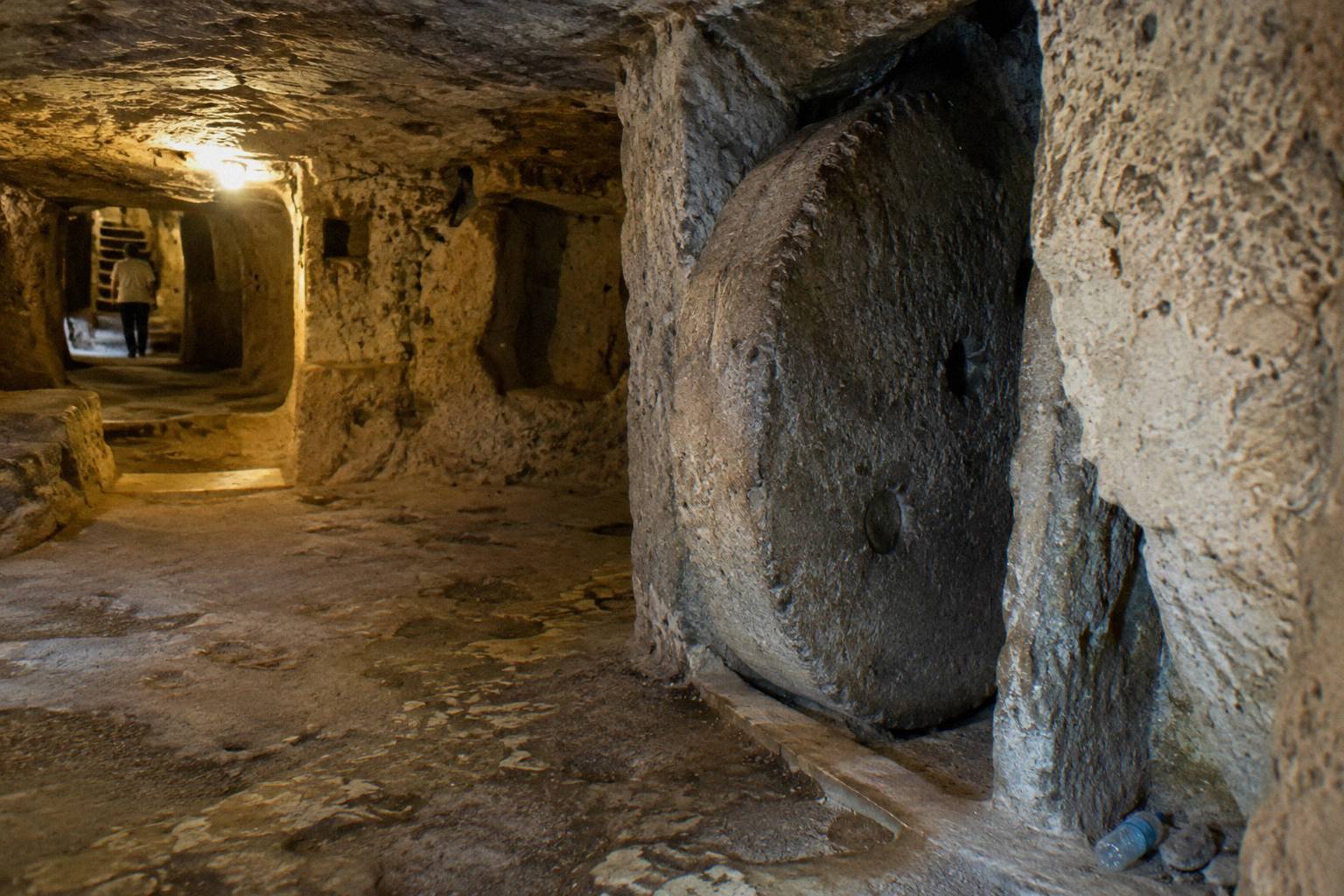
Keep the bag small and wearable on your front or close to your body in the galleries. The Ministry's wording, narrow and sloping, describes passages where a wide backpack rides on other people and on the walls. A cross-body bag or small daypack emptied down to essentials is the practical answer, and anything non-essential stays with the vehicle until the stop is over.
If you want the fuller picture of how the stop fits into the rest of the day, the companion coverage of what the green tour stop is like walks through the whole itinerary. Readers who worry about the passages themselves can read how claustrophobic a guided visit feels, which sticks to the Ministry wording.
One more item earns its place for winter travelers: gloves and a hat that fit in a pocket. The January mean minimum of -3.5 °C applies to the hours around pickup, and hotel pickup on most lines happens early. Those items live in your pockets above ground and cost nothing below it.
What Mistakes Do Travelers Make With Clothing On This Stop?
The recurring mistakes are dressing for the city instead of the day, wearing shoes chosen for the hotel rather than the galleries, and carrying too much into the passages. Each one is fixed before pickup: layers for the season, closed grippy shoes for the low, narrow and sloping floors the Ministry describes, and a slimmed-down bag.
The first mistake flips the whole logic. Travelers hear "underground" and pack a heavy coat for a July day with a mean maximum of 29.3 °C, then swelter through six hours of valley stops to be comfortable for one. The Ministry's cool in summer means pleasantly cooler, not cold, and one thin layer handles it. Winter travelers make the mirror-image error: they dress for -3.5 °C and then peel everything off the moment they descend into a city the Ministry describes as warm in winter.
The second mistake is the biggest. Smooth-soled shoes on a sloping stone floor turn a straightforward visit into careful work. Every green line above runs 7 hours or more on mixed surfaces, so shoes are the one item where function should override style completely. If your wardrobe forces a choice, prioritise shoes over everything else on this list.
The third mistake is the overloaded bag. Backpacks with jackets, cameras, snacks and purchases ride badly in galleries the Ministry itself describes as narrow, and on small-group lines where everyone shares the vehicle, a mountain of gear slows the whole day. One small bag per person, rest on the vehicle, is the etiquette as much as the practicality.
A fourth, smaller error is skipping the booking question. Clothing needs do not change between shared and small-group lines, but durations do, from the 7 to 8 hours of Tatildokya Small Group Day to the 9 hours of lines like Ihlara Hike And Selime Day from €15 per person, which carries no star claim. Longer days mean more above-ground hours for your clothing to handle, so check the duration on the booking page before you finalise the packing list. You can check availability on the Tatildokya line to see its options and times.
The UNESCO listing for Göreme National Park and the Rock Sites of Cappadocia, inscribed in 1985, frames these cities as refuges within a wider rock-cut landscape, and that framing is the last word on clothing: this is an outdoor heritage day in a continental climate with one underground chapter. Dress for the landscape, adjust for the chapter, and let the Ministry's two short descriptions do the rest of the deciding.
Common Questions About Clothing For The Underground City Stop
What Should You Wear For The Underground City Stop On A Cappadocia Green Tour?
Closed, grippy shoes and two to three removable layers. The Ministry describes the underground settlements as cool in summer and warm in winter with low, narrow and sloping passages, and Nevşehir's above-ground averages range from a January mean maximum of 4.1 °C to a July mean maximum of 29.3 °C, so your outer layer follows the season and one thin layer lives in the day bag for the galleries.
Do You Need A Jacket Underground In Summer?
A light one, carried rather than worn. The Ministry says the settlements are cool in summer, which is a contrast to a July mean maximum of 29.3 °C above ground, not a cold room. A thin fleece or long-sleeve top is enough, and it doubles as cover for cooler valley stops earlier in the day.
Are Sandals Okay For The Passages?
Leave them for the hotel. The Ministry describes Kaymaklı's passages as low, narrow and sloping, and sloping carved floors call for closed shoes with tread. Every green tour also spends hours walking above ground, which strengthens the case for trainers or light hiking shoes.
What Bag Should You Carry Inside?
A small one, worn close to your body. Narrow galleries, in the Ministry's wording, are no place for a large backpack. Keep water, your mid layer, sunscreen and medication on you, and leave the rest in the tour vehicle, which every green line provides.
Does Rain Change The Packing List?
Only above ground. May is Nevşehir's wettest month at 57.4 mm on the Meteorological Service averages, so a packable rain shell earns its place in spring. July and August drop to about 10 mm each, when the shell becomes optional weight.
Does Clothing Differ Between Shared And Private Tours?
No. What changes between lines is duration, price and pickup, from Tatildokya Small Group Day at 7 to 8 hours from €55 per person to MyTrip Travel Day at 8 to 9 hours from €33 per person. The Ministry's description of the galleries is the same whichever vehicle you arrive in, so the packing list is too.